


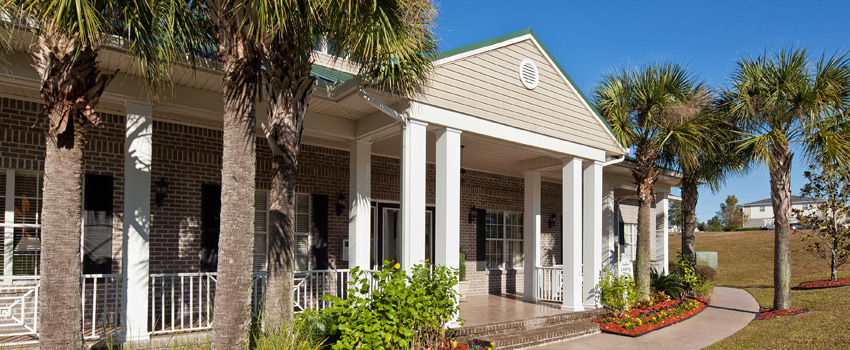
Senior housing DSTs can be a valuable component in a diversified 1031 replacement property portfolio because they are supported by powerful demographic demand, offer the potential for durable long-term income, and provide passive exposure to an essential needs-based asset class when structured with high-quality operators and conservative underwriting.
When investors think about passive DST replacement properties, they often start with the familiar categories:
- Multifamily
- Industrial
- Self-Storage
- Medical Office
Senior housing is sometimes overlooked because it feels more specialized.
But for the right investor, senior housing can play an important role in a retirement-focused portfolio because it is driven by one of the most predictable trends in America: an aging population.
Senior housing DSTs offer a way to stay invested in real estate, generate passive income, and diversify into an asset class that is fundamentally tied to long-term demographic need rather than short-term economic cycles.
What Is a Senior Housing DST?
A senior housing DST is a Delaware Statutory Trust that owns one or more senior living communities.
These properties can include:
- Independent living communities
- Assisted living facilities
- Memory care communities
- Age-restricted housing (55+)
Investors own a fractional interest in the underlying real estate and typically receive:
- Passive ownership
- Professional management and operations
- Monthly or quarterly income distributions
- Potential appreciation at sale
The structure allows investors to access senior housing without owning or operating the facility directly.
Why Senior Housing Can Add Value in a Replacement Portfolio
Senior housing is not just another form of apartments. It is a needs-based real estate category with demand drivers that are often different from traditional commercial property.
The key benefits include:
1. Demographics are a powerful tailwind
The senior population in the United States is growing rapidly. Millions of Americans are moving into retirement age every year, and the need for senior living options continues to expand.
Demand is driven by:
- Aging baby boomers
- Longer life expectancy
- Increasing care needs over time
- Family-driven decisions for safety and support
This is one of the clearest long-term demand trends in real estate.
2. Senior housing is needs-based, not discretionary
Many real estate sectors depend heavily on consumer choice. Senior housing is different. In many cases, the move into assisted living or memory care is not optional. It is driven by health, safety, and daily living needs.
That makes senior housing less dependent on trends like:
- Luxury spending
- Retail behavior
- Office demand shifts
It serves a basic human requirement: care and support.
3. Potential for strong income inside a diversified portfolio
Senior housing DSTs often target attractive distribution levels because the operating model can support higher revenue per unit than standard apartments.
Many investors use senior housing as an “income enhancer” alongside more traditional core holdings like:
- Industrial
- Multifamily
- Medical office
The goal is balance: stability plus selective higher income exposure.
4. Reduced tenant concentration risk
Unlike a triple-net lease property with one tenant, senior housing communities generate revenue from many residents. That creates diversification within the asset itself.
Instead of relying on one lease, income is spread across:
- Dozens or hundreds of residents
- Shorter-term agreements
- Multiple levels of care services
That structure can reduce single-tenant concentration risk.
5. Passive exposure without operational responsibility
Owning senior housing directly is extremely complex.
It involves:
- Staffing
- Healthcare-related oversight
- Regulatory compliance
- Daily operations
- Specialized marketing and leasing
A DST structure allows investors to remain passive while experienced operators handle execution.
For retiring landlords, that separation is critical.
The Big Reality: Senior Housing Is Not “Simple Real Estate”
Senior housing is compelling, but it is not a low-maintenance asset class from an underwriting standpoint. Performance depends heavily on operations, not just the building.
Senior housing communities are sensitive to:
- Staffing costs
- Occupancy management
- Local competition
- Regulatory environments
- Operator execution quality
This is why senior housing must be approached with discipline, not blindly chased for yield.
What Defines a High-Quality Senior Housing DST?
Senior housing success is driven more by the operator than almost any other DST category.
Key diligence factors include:
1. Operator track record
Senior housing is an operating business.
The sponsor must demonstrate:
- Experience through cycles
- Strong staffing and retention practices
- Proven occupancy management
- Conservative financial controls
A strong operator can stabilize performance. A weak operator can destroy it.
2. Property type matters
Not all senior housing carries the same risk.
Generally:
- Independent living tends to be more stable
- Assisted living has moderate operational complexity
- Memory care can be higher revenue but higher execution risk
Understanding the care level is essential.
3. Market supply and demand balance
Senior housing can be overbuilt in certain regions.
A quality DST will focus on markets with:
- Strong senior population growth
- Limited new supply
- High barriers to entry
- Stable household wealth levels
Supply discipline matters.
4. Conservative underwriting assumptions
Senior housing returns can look attractive on paper.
Investors should be cautious of projections that rely on:
- Unrealistic occupancy growth
- Aggressive rent increases
- Overly optimistic expense control
The best offerings assume normal challenges, not perfection.
5. Expense and staffing risk management
Labor is one of the biggest cost drivers.
Strong sponsors plan for:
- Wage inflation
- Staffing shortages
- Agency cost pressures
- Operational reserves
Senior housing is fundamentally a people-driven business.
Main Risks of Senior Housing DSTs
Senior housing can offer meaningful income and diversification, but investors must understand the key risks:
1. Operational complexity
This is not a “rent collection” business. It requires daily execution, staffing, and care delivery support.
2. Staffing and labor cost volatility
Rising labor costs can compress margins quickly. This is one of the most important risks in the sector.
3. Occupancy sensitivity
Senior housing communities must maintain occupancy to perform. Move-ins and move-outs can be more volatile than apartments.
4. Regulatory exposure
Senior living is subject to more oversight than standard real estate. Compliance matters.
5. Illiquidity
Like all DSTs, senior housing investments are long-term and not freely tradable. Liquidity should not be assumed.
How Senior Housing Fits Into a Diversified DST Portfolio
Senior housing is usually best positioned as a component, not the entire portfolio.
A balanced replacement portfolio might include:
- Industrial for long-lease stability
- Multifamily for steady housing demand
- Medical office for defensive tenancy
- Senior housing for demographic-driven income potential
- Lodging or mineral royalties for selective higher yield
Common allocation ranges include:
- 10% to 25% senior housing depending on risk tolerance
- Higher allocations only for investors comfortable with operational exposure
Senior housing should be intentional, not oversized.
Senior Housing DSTs vs. Direct Ownership
Many investors ask: “Why not just buy a senior housing facility myself?”
The reality is that direct ownership requires:
- Staffing expertise
- Regulatory knowledge
- Healthcare-adjacent operational oversight
- Significant operational infrastructure
DSTs allow investors to participate without becoming operators. For most individual investors, passive exposure is the only realistic approach.
Who Should Consider Senior Housing DSTs?
Senior housing DSTs are often a strong fit for investors who:
- Want diversification beyond traditional real estate categories
- Value demographic-driven demand
- Are comfortable with moderate operational risk
- Want higher income potential within a balanced portfolio
- Want passive exposure with professional management
- Are building a portfolio large enough to diversify properly
Who Should Be Cautious With Senior Housing DSTs?
Senior housing may not be appropriate for investors who:
- Want the most conservative, bond-like cash flow
- Are extremely risk-averse
- Need near-term liquidity
- Are uncomfortable with staffing-driven expense volatility
- Cannot diversify due to a smaller exchange amount
This is a powerful sector, but not a “sleep at night no matter what” category.
Senior Housing DSTs: Demographic Demand Meets Passive Real Estate Strategy
Senior housing DSTs can be a valuable component in a 1031 replacement property portfolio because they:
- Are supported by long-term aging population trends
- Provide needs-based demand drivers
- Can enhance portfolio income when sized properly
- Offer diversification beyond traditional tenant-based real estate
- Allow passive ownership without operational responsibility
But results depend heavily on operator quality, market selection, expense discipline, and conservative underwriting.
Contact Us to Learn More About Senior Housing DSTs
At Corcapa 1031 Advisors, we help investors evaluate senior housing offerings alongside traditional DST offerings and build diversified portfolios aligned with income goals, risk tolerance, and long-term planning priorities.
Contact Corcapa 1031 Advisors today to review whether senior housing DSTs belong in your replacement strategy — schedule an appointment or call (949) 722-1031
About Corcapa 1031 Advisors and 1031 DST Solution
Founded in 2011, Corcapa 1031 Advisors and 1031 DST Solution is a financial advisory firm specializing in 1031 and 1033 exchanges and tax mitigation strategies. The firm works with Delaware Statutory Trusts, Tenant-in-Common programs, sole-ownership transactions, and 721 UPREIT structures. Corcapa has advised hundreds of clients across thousands of investments, facilitating more than $1 billion in completed exchanges. The firm works with registered investment advisors and financial advisors nationwide on tax-deferred exchange strategies.
This is for informational purposes only, does not constitute individual investment advice, and should not be relied upon as tax or legal advice. This is not an offer to buy or sell or a solicitation of an offer to buy or sell any interest. DST investments are speculative, illiquid, and may carry a high degree of risk – including the potential loss of the entire investment. Performance is not guaranteed and could be lower than anticipated. Past events and trends do not predict or guarantee or indicate future events or results.
Securities offered through DAI Securities, LLC, Member FINRA/SiPC.
Request 1031 Exchange DST Property Listings
Please complete the information below to register for access to current 1031 exchange replacement offerings.
We respect your privacy. We Promise To Not Sell Your Information Ever.
"*" indicates required fields